
Carbios unveils major innovation in polyester recycling with new textile preparation line, in the presence of Roland Lescure, French Minister of Industry
- Polyester textiles account for 2/3 of the global PET market of around 100 million tons. Only 13% of textile waste is currently recycled, and only 1% is recycled "fiber-to-fiber"[1],[2]
- Carbios has developed an automated textile preparation line integrating all stages (shredding and extraction of hard points) to transform textile waste into raw material for enzymatic recycling
- Carbios’ textile preparation line meets a critical challenge for textile industrialization and circularity
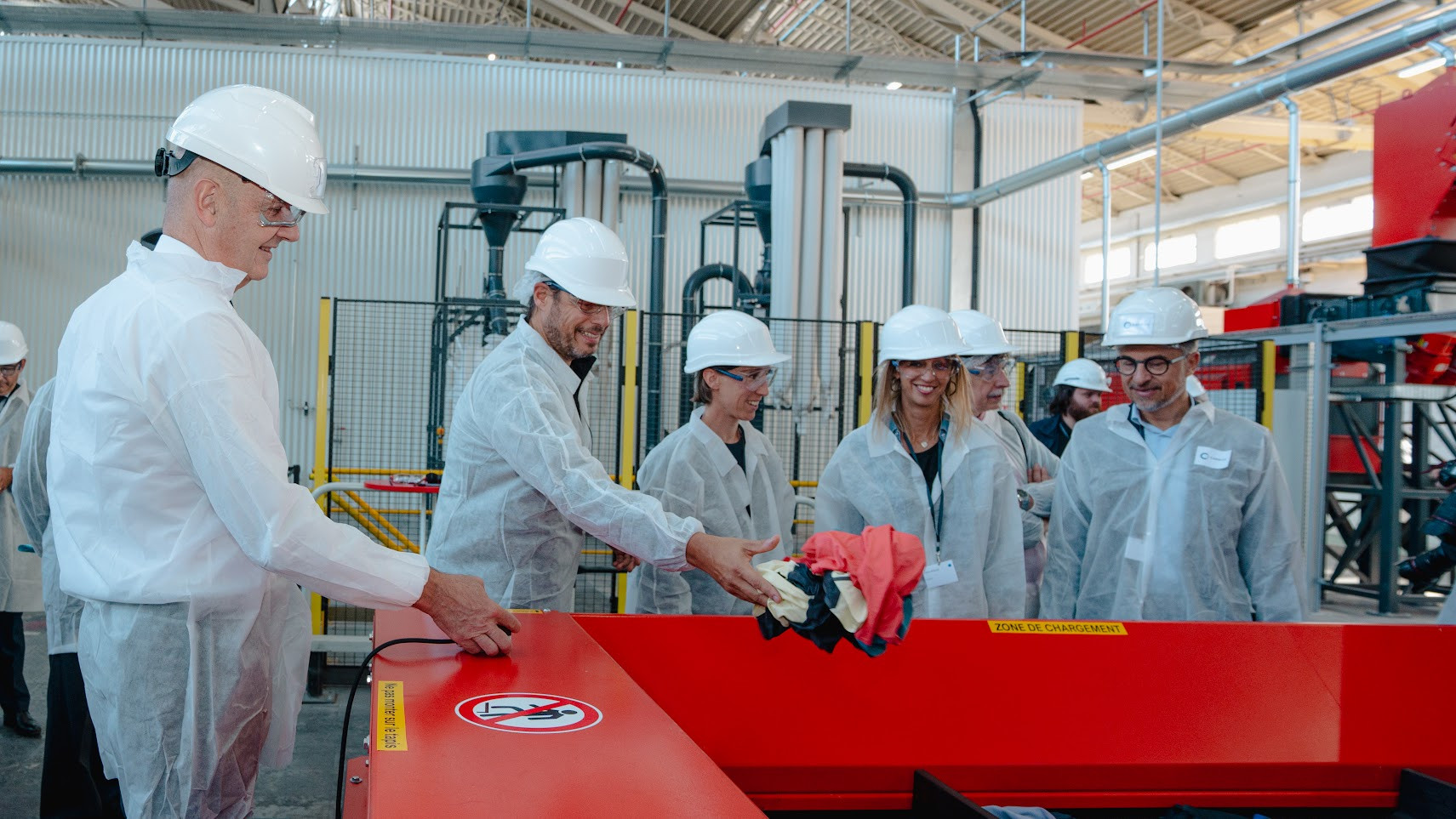
Clermont-Ferrand (France), 2 October 2023 (6:00 pm CET). Carbios, (Euronext Growth Paris: ALCRB), a pioneer in the development and industrialization of biological technologies to reinvent the life cycle of plastic and textiles, today inaugurated its textile preparation line at its demonstration plant in Clermont-Ferrand, in the presence of Mr. Lescure, French Minister for Industry. To streamline the textile preparation phase, which is currently carried out by hand or on several lines, Carbios has developed a fully integrated and automated line that transforms textile waste from used garments or cutting scraps into raw material suitable for depolymerization with its enzymatic biorecycling process. This patented line integrates all preparation stages (shredding and extraction of hard points such as buttons or fasteners), and provides Carbios with a high-performance, scalable development tool. The platform will help validate the biorecycling technology for textiles at demonstration plant scale (by 2024), and provides Carbios with expertise in working with collection and sorting operators to specify the quality of textiles and the preparation steps needed to make them suitable for enzymatic recycling. This expertise will also be invaluable to brands in the eco-design of their products.
Figure 1 : Roland Lescure, French Minister of Industry (left) accompanied by Emmanuel Ladent, CEO Carbios (far right) and representatives of Carbios partner brands (On, Salomon and Puma), inaugurates the textile preparation line for biorecycling.
Textile recycling is a major issue, as the need for solutions to manage the life cycle of these products is critical: worldwide, only 13% of textile waste is currently recycled, with the remaining 87% ending up in landfill or incineration. Carbios is contributing in the creation of a French recycling industry. Thanks to its know-how and its innovative, collaborative spirit, Carbios is providing a solution – cutting-edge and made in France - to what was until now a real obstacle to textile recycling.

Textile preparation is an essential step for recycling: without a solution for textile preparation, there is no recycling industry, and no textile circularity. The output from our new preparation line is ready to be directly integrated into our biorecycling process, which enables closed-loop "fiber to fiber" recycling - a strong demand from the brands we work with. I would like to thank the French Government for its support throughout the industrialization and internationalization of our technology.
This preparation line completes the work in progress with the Fiber-to-fiber Consortium on biorecycling and will accelerate the industrial development of Carbios’ technology.
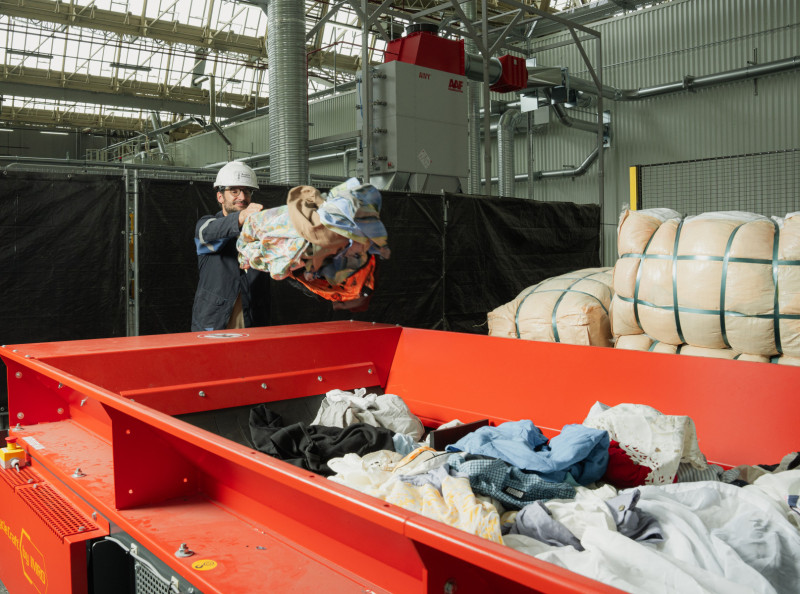
Figure 2 : A Carbios employee loads textile onto the preparation line
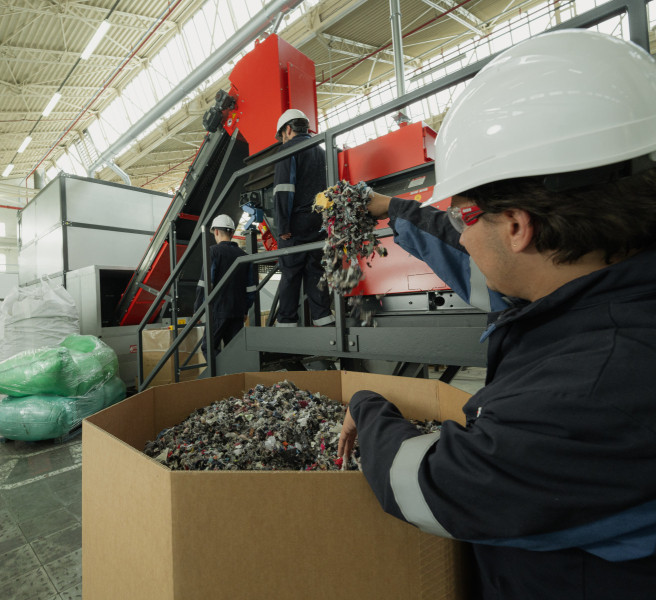
Figure 3 : A Carbios employee inspects shredded textile waste without hard points at the end of the process
Current collection, sorting and preparation infrastructures limit the amount of textile waste available for "fiber-to-fiber" recycling. Collection rates average around 15-25% worldwide[1], and much of the waste collected is exported to Africa, Asia or Latin America for sorting.
Moreover, textiles are highly complex materials, with yarns of different composition (or nature) that are difficult, if not impossible, to physically separate. However, the highly selective enzyme developed by Carbios can specifically depolymerize the PET (polyester) present in textile material.
At present, textiles are sorted and prepared mainly by hand, with low yields, particularly for disruptors to recycling processes such as "hard points" (zips, buttons, etc.). To optimize this crucial phase, Carbios is contributing a textile preparation solution to accelerate the development of biorecycling in the textile industry. Enzymatic recycling, or biorecycling, therefore contributes to the construction of a textile recycling chain and the acceleration of textile circularity, also enabling brands to do away with used bottles
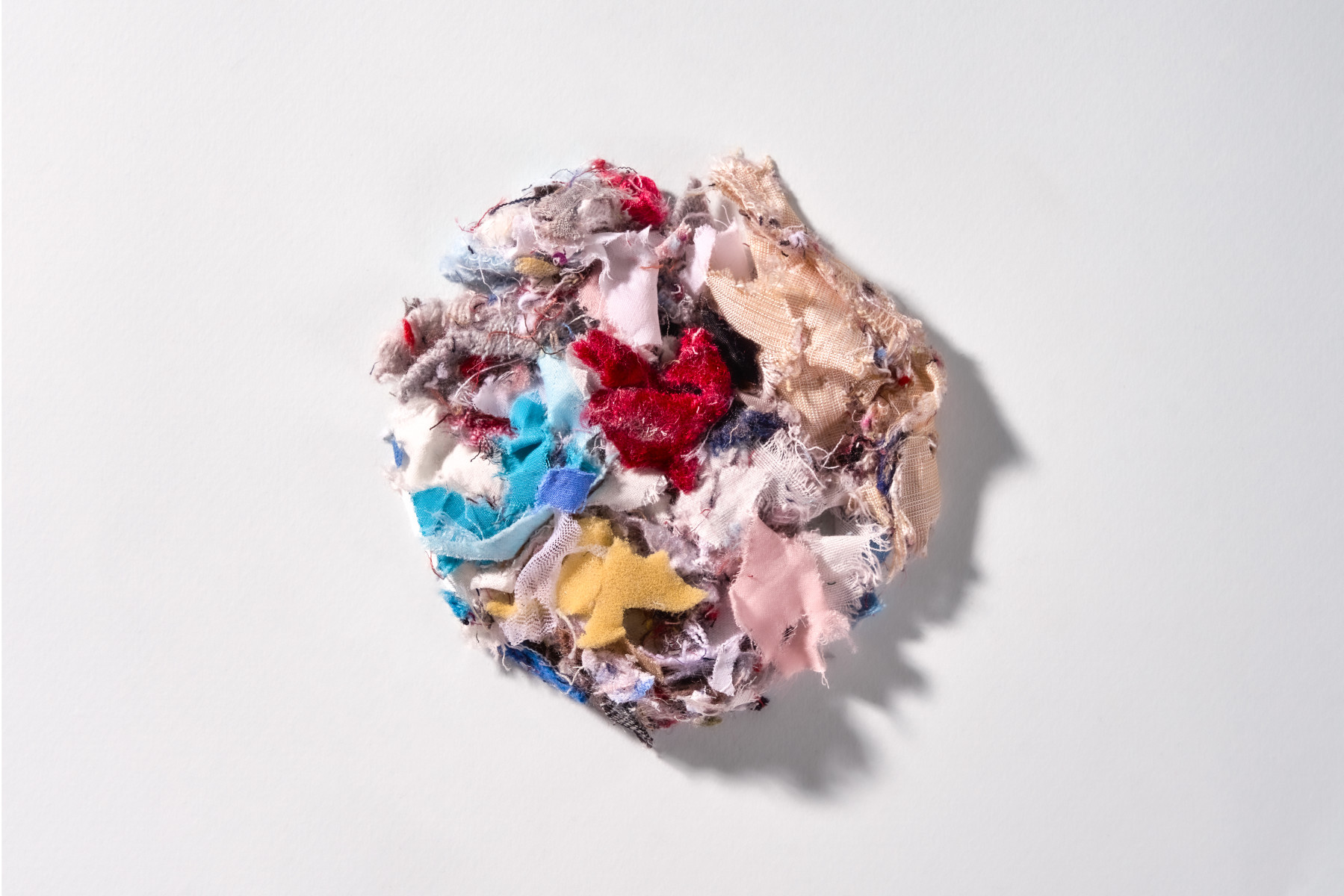
Figure 4 : Textile waste leaving Carbios’ preparation line, suitable for enzymatic recycling
Key information about the textile preparation line
| Key Information | |
| Process stages: |
|
| Processing capacity: | 300kg textiles processed per hour (in a continuous process) |
| Patent: | Patent filed in 2023 |
Key dates in the development of textile biorecycling
| Year | Key milestones in textile biorecycling |
| 2018 | First textile depolymerization tests at laboratory scale |
| 2021 | First textile depolymerization tests at pilot scale |
| 2022 |
|
| 2023 |
|
| 2024 | Biorecycling of textiles at demonstration plant scale |
Textile collection in Europe from 1 January 2025
Separate collection of textile waste will be mandatory in Europe from 1 January 2025. By 2030, the European Union intends to set a minimum content of recycled fibers in the composition of textiles, according to the Commission's website.[1]
Co-funded by the European Union. Views and opinions expressed are however those of the author(s) only and do not necessarily reflect those of the European Union or CINEA. Neither the European Union nor the granting authority can be held responsible for them.
[1] Ellen MacArthur Foundation, 2017
[2] Fiber-to-fiber recycling transforms textile waste into new fibers for clothing and textiles, with no loss in quality
[3] Ellen MacArthur Foundation, 2017
[4] https://ec.europa.eu/commission/presscorner/detail/fr/qanda_22_2015
CARBIOS is a biotech company developing and industrializing biological solutions to reinvent the life cycle of plastic and textiles. Inspired by nature, CARBIOS develops enzyme-based processes to break down plastic with a mission to avoid plastic and textile pollution and accelerate the transition to a circular economy. Its two disruptive technologies for the biorecycling of PET and the biodegradation of PLA are reaching industrial and commercial scale. Its biorecycling demonstration plant has been operational since 2021 and construction work of the world’s first industrial biorecycling plant is expected to restart between June and September 2025, subject to the necessary additional funding. CARBIOS, founded by Truffle Capital, has received scientific recognition, notably with the cover of Nature and a second article published by Nature, and is supported by prestigious brands in the cosmetics, Food & Beverage and apparel industries to enhance their products’ recyclability and circularity. Nestlé Waters, PepsiCo and Suntory Beverage & Food Europe are members of a packaging consortium founded by CARBIOS and L’Oréal. On, Patagonia, PUMA, PVH Corp. and Salomon collaborate with CARBIOS in a textile consortium.
CARBIOS is part of the B Corp™ global community of companies using business as a force for good.
Visit www.carbios.com/en to find out more about biotechnology powering plastic and textile circularity.
LinkedIn: CARBIOS / Instagram: insidecarbios
Information on CARBIOS shares:
ISIN Code: FR0011648716
Ticker Code: Euronext Growth: ALCRB
LEI: 969500M2RCIWO4NO5F08
CARBIOS, founded in 2011 by Truffle Capital, is eligible for the PEA-PME, a government program allowing French residents investing in SMEs to benefit from income tax rebates.